5 Improv Exercises That Make Business Meetings More Productive
Most business meetings die a slow death by monologue: one person talks, everyone else waits their turn to talk, and nobody actually listens. Improv training fixes this because improvisers can’t survive without listening — the whole scene collapses if you’re just waiting to say your line.
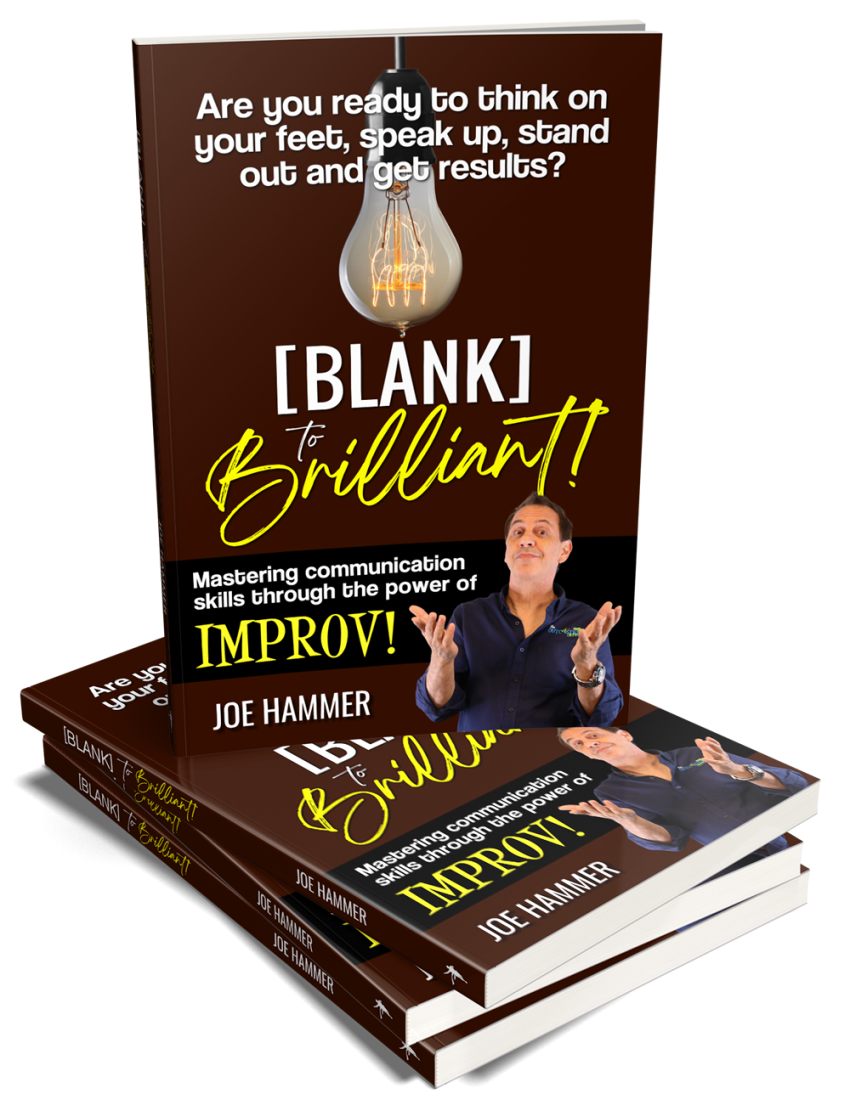
Here are five improv exercises that translate directly into better meetings, pulled from the training approach behind Blank to Brilliant.
1. “Yes, And” for Idea Building
In improv, you never shut down your scene partner’s idea — you accept it and add to it. In a meeting, this means responding to a colleague’s proposal with what you can build onto it before you raise objections. Teams that practice this generate more ideas per meeting and spend less time in defensive posturing.
2. Word-at-a-Time Story for Shared Ownership
Go around the room building a single sentence one word at a time. It sounds simple, but it forces total presence — you can’t plan your word in advance, only respond to what just happened. Try it before a brainstorm to break people out of rehearsed talking points.
3. Status Swap for Reading the Room
Improvisers train to notice and adjust status — who’s dominating, who’s deferring — in real time. In a meeting, this becomes a habit of checking who hasn’t spoken yet and actively making room, rather than letting the loudest voice set the agenda by default.
4. The Follow-the-Follower Game for Active Listening
Partners mirror each other’s movements, swapping who’s leading without announcing it. The business version: practice restating a colleague’s point in your own words before responding to it. It’s a small habit that prevents the number-one meeting failure — two people arguing past each other because neither actually listened.
5. Object Work for Concrete Communication
Improvisers train to describe imaginary objects with specific, sensory detail instead of vague gestures. Applied to business communication, this means replacing vague asks (“let’s sync on this”) with concrete ones (“can you send me the updated numbers by Thursday so I can brief the client Friday morning”).
Why This Works
None of this requires anyone to be funny or theatrical. Improv training is really communication training in disguise — it builds the reflexes of listening, accepting, and responding specifically, which is exactly the skill set most business communication is missing.
These exercises and dozens more are covered in depth in Blank to Brilliant, Joe Hammer’s book on using improv as the ultimate soft skill for business communication.